Thinking tool · 2026
Intuition Canvas
I arrange things by feel. A model reads the same things from the words alone. This tool keeps my version frozen, so I can see where we disagree.
For thoughts I don’t want to resolve too early.
Open the tool →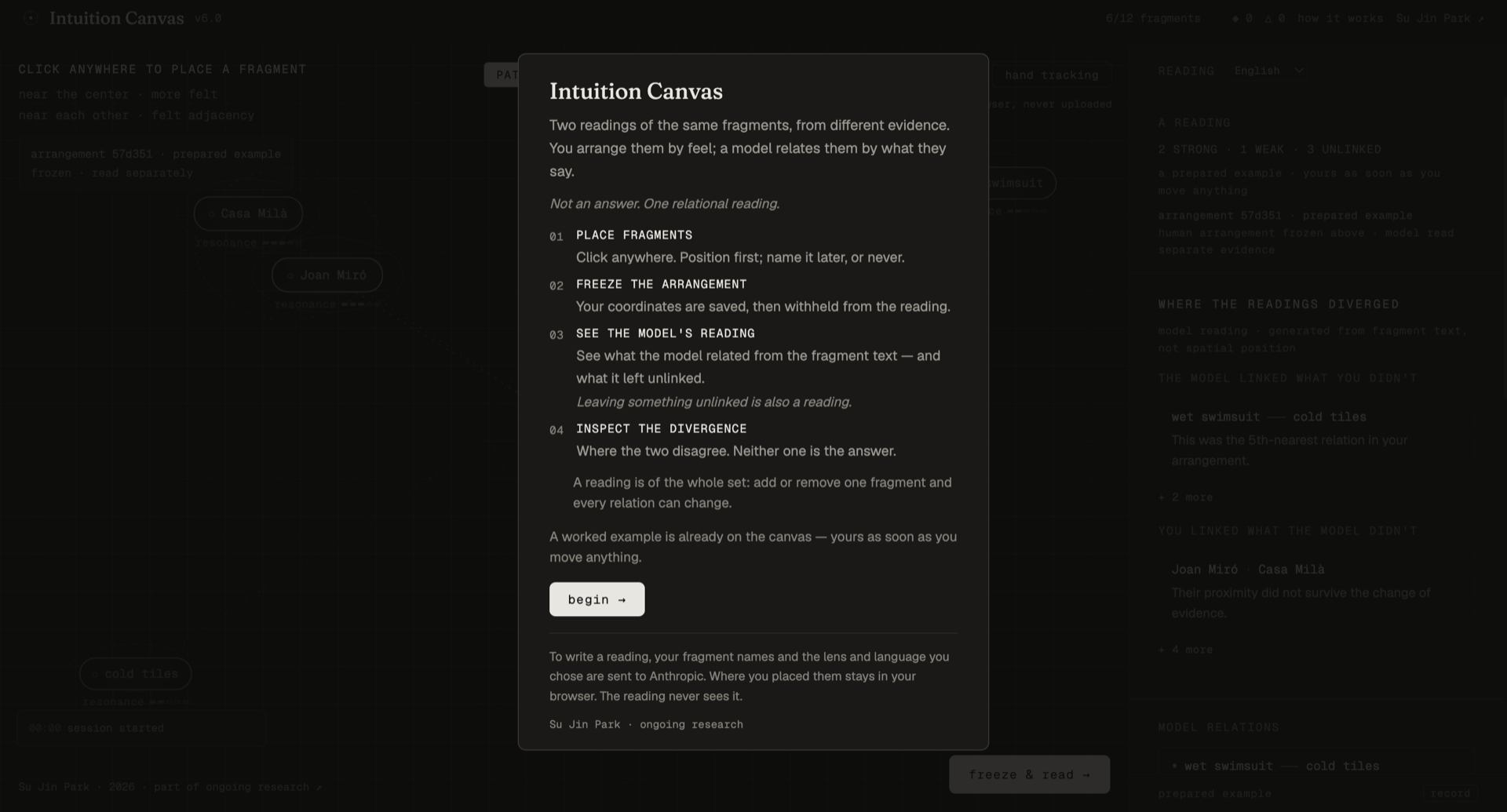
The question is not whether the model reads better. It is whether two readings, made from different evidence, can be placed side by side and inspected. Your reading is frozen before the model’s appears, so neither can shape the other.
-
01
Place
Arrange fragments in a field. Distance from the center records felt intensity. Proximity records felt relation.
-
02
Freeze
Once frozen, it stays. Whatever the model says next can't move it.
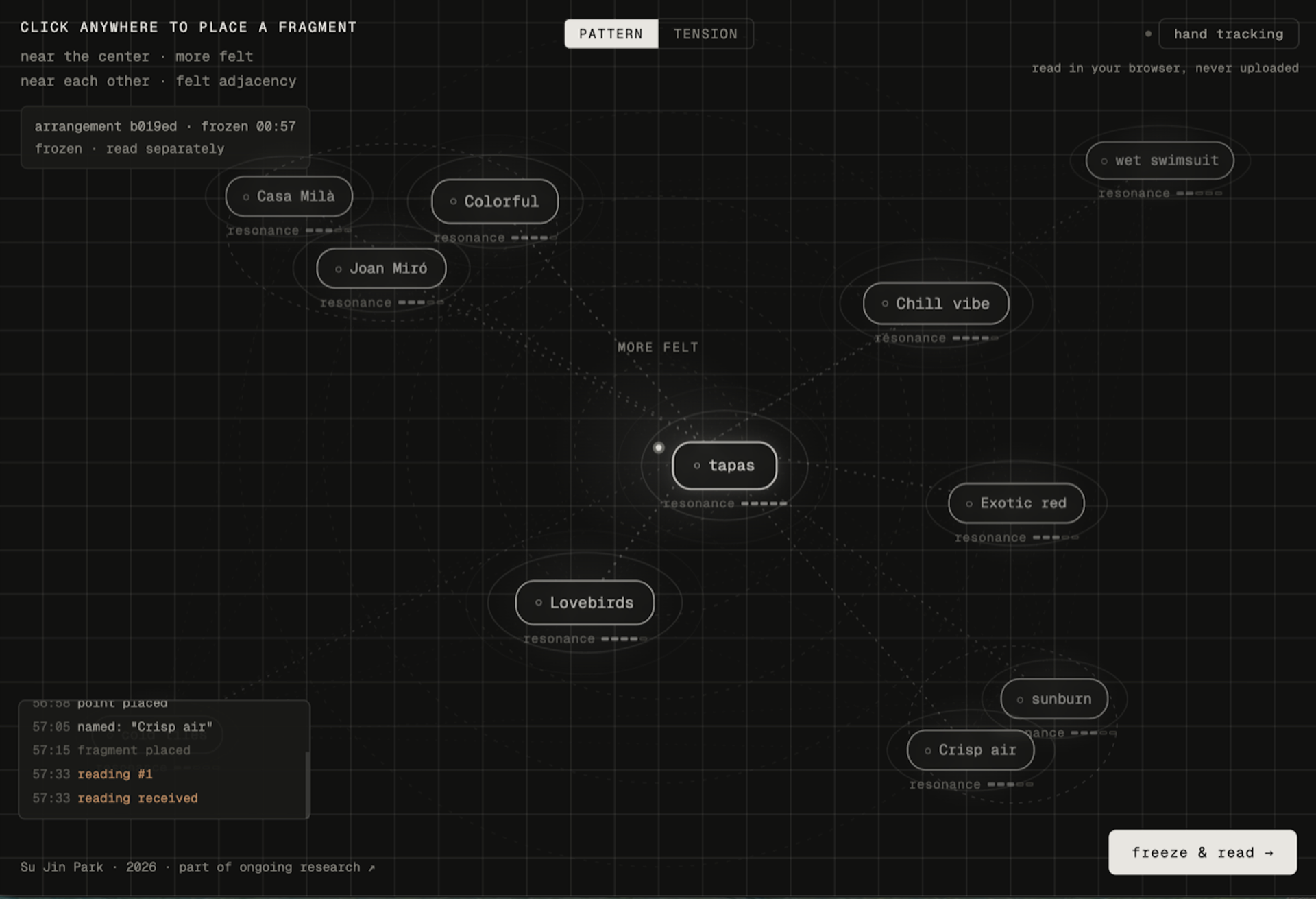 ic-v6-frozen.png waiting for this capture
arrangement b019ed, frozen — the same arrangement the divergence below was read against. -
03
Model reads — text only
The model receives the fragment text and nothing else. No coordinates, no positions. It returns relations, and may leave fragments unlinked.
sent ·
[{ id, text }]per fragment, the lens, the reading language — and nothing further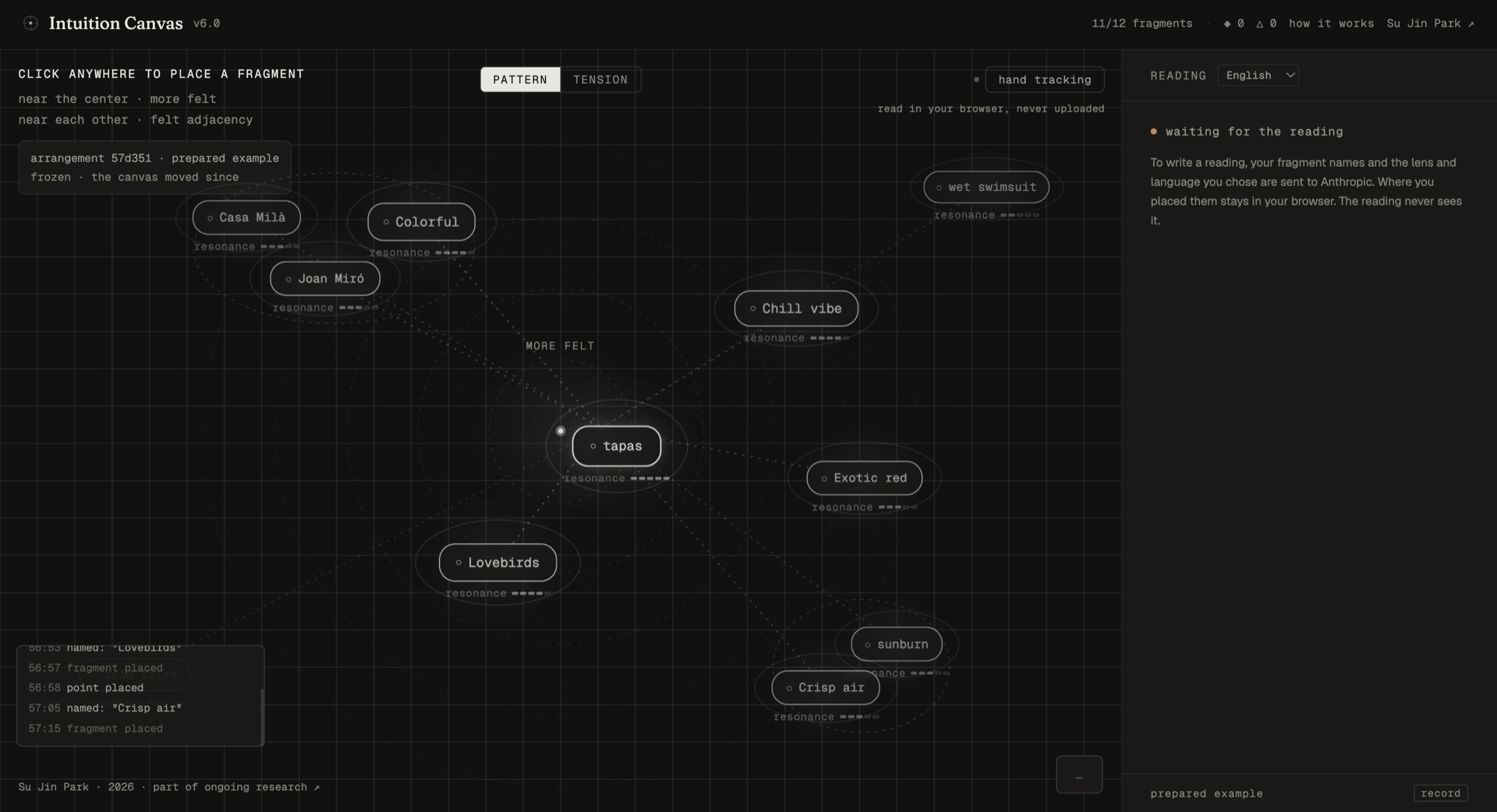 ic-v6-reading.png waiting for this capture
What travels, said while it travels. The names and the lens go; the placement does not. -
04
Inspect divergence
Where the two readings disagree.
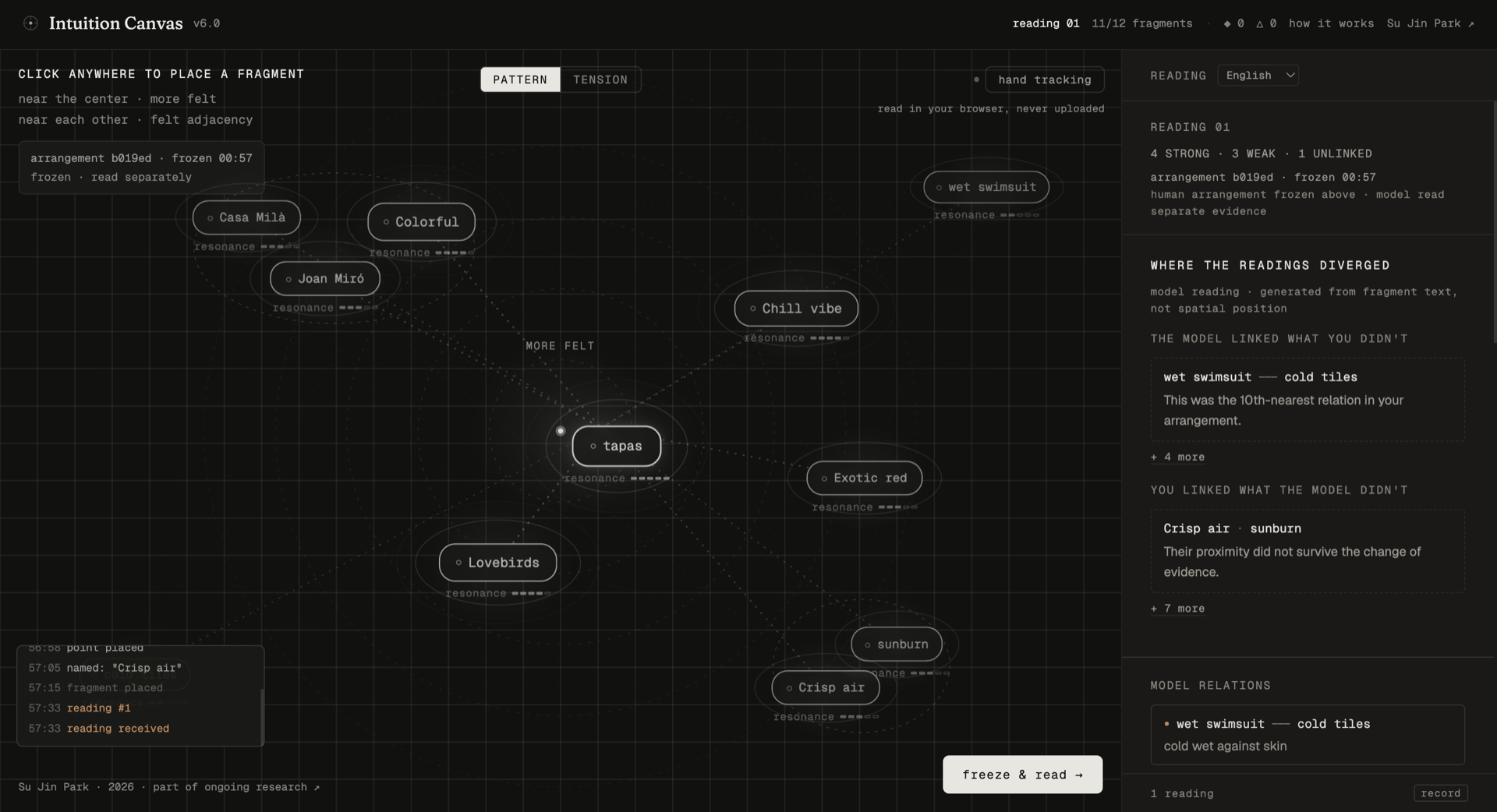
The model linked wet swimsuit and cold tiles — the 10th-nearest pair in the user’s arrangement.
The user placed Crisp air beside sunburn — the model left them unlinked.
Neither reading is treated as the answer. The difference is the material.
Control test: six unrelated words, three sets, three runs each.
The ranges do not overlap.
Observed failure mode: the model occasionally promotes structural similarity — things that pile up, things that repeat — to strong.
Full record: docs/control-test.md in the repository.
Every reading is stored with the arrangement it was frozen against, so a reading can be reproduced rather than remembered.
Export and import carry fragments, frozen coordinates, relations, protocol version, and reading history in one file.
Four sessions so far: two by one person, two by people who had never seen it. I still don’t know how the gap differs from person to person.