Whose judgment is it?
- Independent reasoning
- Authority reliance
- Exploratory continuation
- Decision ownership
I chose not to
claim.


01 TraceThe record.
Ben Study
38 months of talking to one AI, coded as data instead of remembered as a story.
Selected context, not a continuous measure.
- First 18 months
- 1.7%
- Next 20 months
- 4.7%
The rate changed; it did not establish that I was choosing the direction.
Research Self-Audit
A finding I chose not to claim, and why.
02 MeasureCan the gap be scored?
Felt vs Trace
A writing test: how much did the answer feel like yours, and how much of the AI's wording stayed in the text?
The Felt vs Trace probe has been piloted with nine participants. This is instrument development, not evidence that an interface causes a change in autonomy. The linked case documents an earlier single-person run.
MCAB
A way to score whether an AI answer shrinks, keeps, or grows what you were already thinking.
03 DesignCan it be changed?
04 PracticeWhere the question first surfaced.
05 TestWhat happens when the frame changes?
- Frame timing
- earlier ↔ later
- Recommendation
- gentle ↔ strong
- Measure
- planted-error detection
- Compared against
- self-report · written trace
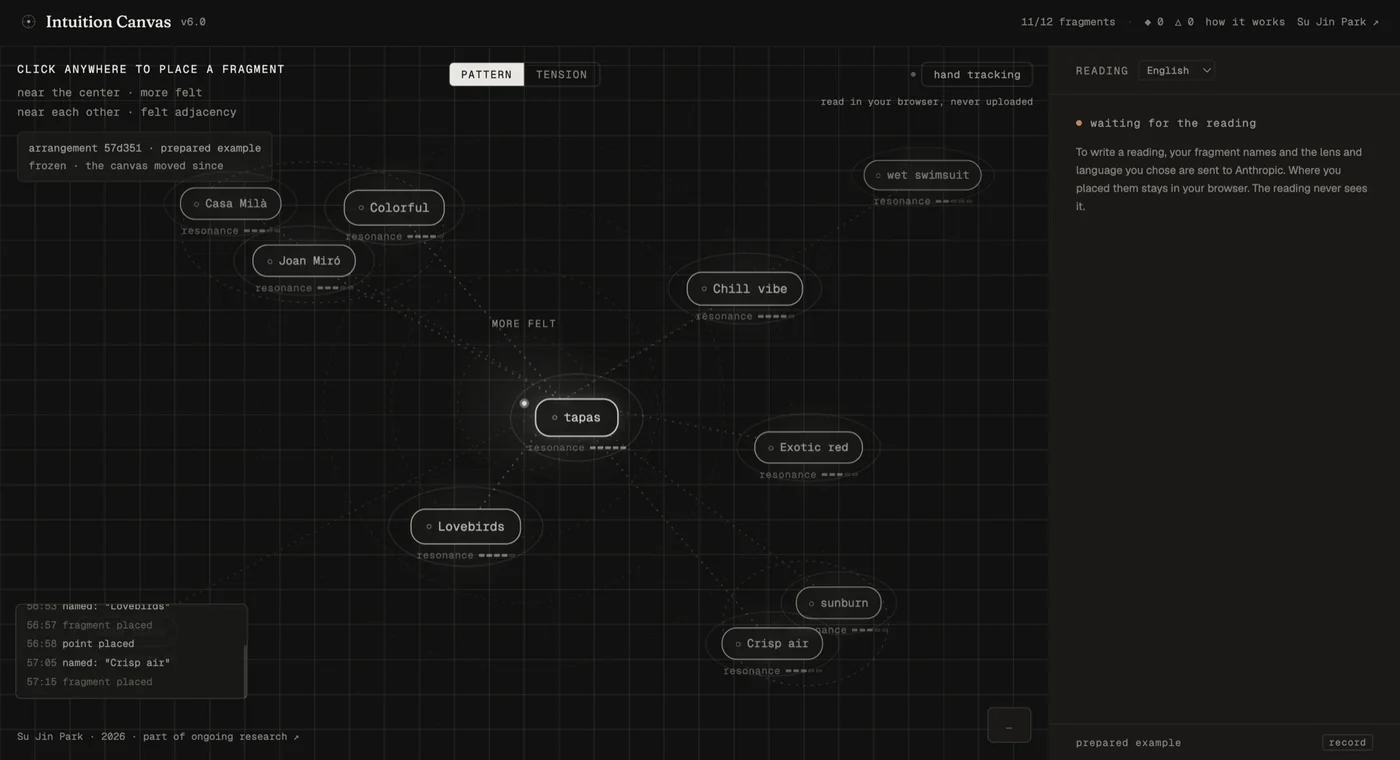
The probe compares felt independence with written trace. This experiment asks whether frame timing and recommendation strength affect planted-error detection.
Autonomy is not how often you leave the frame. Stay inside a good frame and that may be judgment. Bolt from it and that may be reflex. What matters is whether you can tell which one you just did, and whether you leave when the frame is wrong.